If you have been involved in a car accident in the Atlanta area, you may have expected to simply file your claim and wait for a settlement. But what do you do when the insurance company challenges your claim by arguing that you were partially at fault, or when dealing with a hit-and-run accident?
No matter what circumstances were involved in the crash, having solid evidence that proves your car accident claim is essential to resolving your case. Understanding what evidence is needed to substantiate your claim is essential. Georgia is a fault-based state with strict legal standards, and insurance companies and their legal teams actively seek to minimize or deny settlements.
Building a strong legal case begins with collecting the right evidence. This article outlines the key types of car accident evidence you should preserve and document to support your claim and help your case withstand legal scrutiny throughout the claims or litigation process.
Why Evidence Is the Foundation of Every Car Accident Claim
Georgia is an “at-fault” state, meaning that a car accident victim has the legal responsibility of proving the other driver’s negligence. A common tactic insurance companies use is to undervalue or deny claims based on weak or unsubstantiated evidence.
Evidence obtained in the first few hours and days after an accident is often the most powerful proof in car accident cases. One of the key principles in insurance claims is that if it is not documented, it did not happen in the eyes of the insurance provider or jury. The stronger the evidence provided, the stronger your position during settlement negotiations.
Scene Evidence and Official Reports
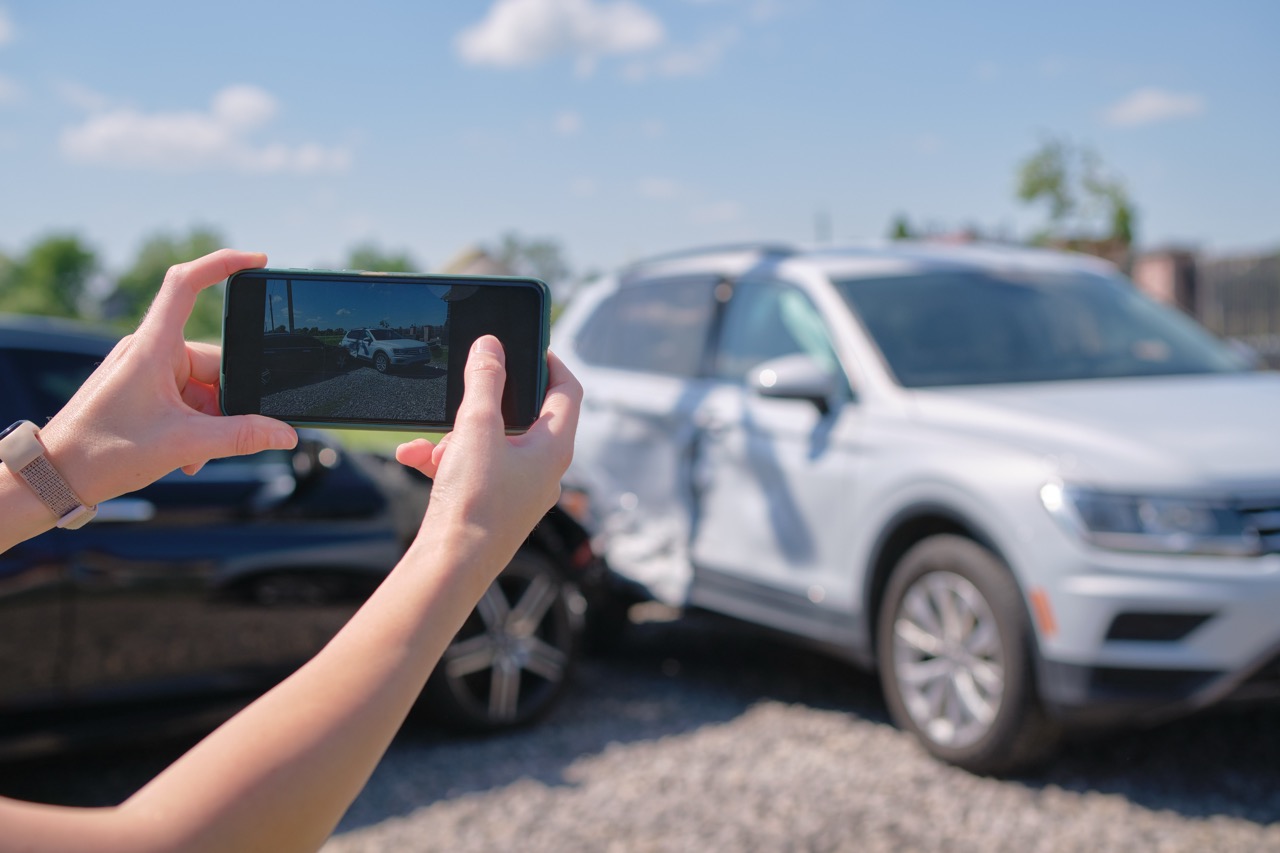
Photos and videos are the most critical forms of immediate evidence in a car accident case, as they provide a visual depiction of what occurred.
Photos and Videos
When taking photos and videos, be sure that your phone’s timestamp is accurate and include the following:
- All vehicle damage from multiple angles, close-ups, and wide shots
- The area surrounding the accident scene, including road conditions, weather, and lighting, and cross streets or GPS coordinates
- Traffic signs, lane markings, and signals
- All skid marks, broken glass, debris, and fluid spills
- Construction zones, obscured signs, or potholes
- The license plates of all vehicles involved
- All of your visible injuries
Aside from photographic evidence, you should also gather witness information, including their names, phone numbers, and a brief description of what they saw.
Police Report
Obtain a copy of the police accident report. The report will contain the officer’s description of the incident, an indication of fault, witness statements, and citations issued. To obtain a copy of the report, submit a request to the Georgia Department of Driver Services, the Atlanta PD, the Fulton County PD, or the Georgia State Patrol. It is important to recognize that the accident report is not the final determination.
Other Official Reports
Other reports needed to prove a car accident claim include 911 call recordings, which can be obtained through open records requests. You can also request traffic camera footage from the City of Atlanta and GDOT cameras. Nearby stores, gas stations, and restaurants may also have surveillance footage. But footage must be requested as soon as possible, as it is often overwritten within days.
Medical Evidence — Documenting Your Injuries
Medical evidence is also an essential component of any car accident claim. Some of the basic medical evidence required by insurers are ER records and discharge summaries that document an initial diagnosis and treatment.
Insurance companies also take a close look at follow-up treatment records for physical therapy, specialists, and mental health treatment.
Other medical evidence assessed by the insurance company includes:
- Diagnostic imaging: X-rays, CT scans and MRIs
- Prescription records: Medications to alleviate pain, inflammation, anxiety, or sleep aids
- Itemized medical bills
- Physician’s notes establishing a causal link between your injuries and the accident and that they are consistent with a motor vehicle collision
- Future care recommendations: A care plan recommending ongoing treatment, surgery, or therapy
You should also be mindful to avoid gaps in treatment. Insurers often try to argue that if you failed to seek treatment, you were not really injured.
Financial Evidence — Proving Your Economic Losses
- Lost wages: employer letter confirming dates missed, pay stubs showing pre-accident earnings, tax returns for self-employed individuals
- Lost earning capacity: if injuries prevent you from returning to your previous job or career
- Medical bills: organize by provider, date, and amount
- Out-of-pocket expenses: transportation to medical appointments, home modifications, hired help for tasks you can no longer do
- Property damage: repair estimates, total loss valuations, rental car receipts
- Future losses: economist or life care planner projections for ongoing costs
Personal Documentation and Digital Evidence
Aside from official and medical records, personal documentation and digital evidence can play a significant role in proving a car accident claim.
One of the most recommended actions is to keep a pain journal where you log your pain levels, activities you cannot participate in, sleep disruptions, and the emotional impact you have suffered from being injured. You should also be ready to present before-and-after photos and videos of your life, such as playing sports, traveling, etc., before and after you were injured, showing you struggling with daily tasks or using medical equipment.
Other personal documentation may include:
- Witness statements from family and friends that detail how your injuries have changed your life
- Any dash cam footage you may have or from witnesses
You should be cautioned that anything you post on social media can be used against you. It is best to avoid posts that provide details regarding activities, trips, or statements that could be interpreted as being inconsistent with your injuries.
Digital Evidence
In our modern age, digital evidence carries considerable weight in car accident claims. Cell phone records can prove the other driver was on a call or texting at the time of the accident. An Atlanta car accident attorney can subpoena cell phone records along with other digital evidence:
- Vehicle black box data from the Event Data Recorder (EDR) that records speed, braking, acceleration, and steering data that occurred moments before the collision
- Navigation/GPS data that can show the route, location, and speed at the time of the accident
- Rideshare app data that can be obtained if the at-fault party was an Uber or Lyft driver
Do you need help gathering evidence for your accident claim? Durham Law Group can help preserve critical evidence before it disappears. Contact our Atlanta law firm today at 404-845-3434 to schedule a free consultation.