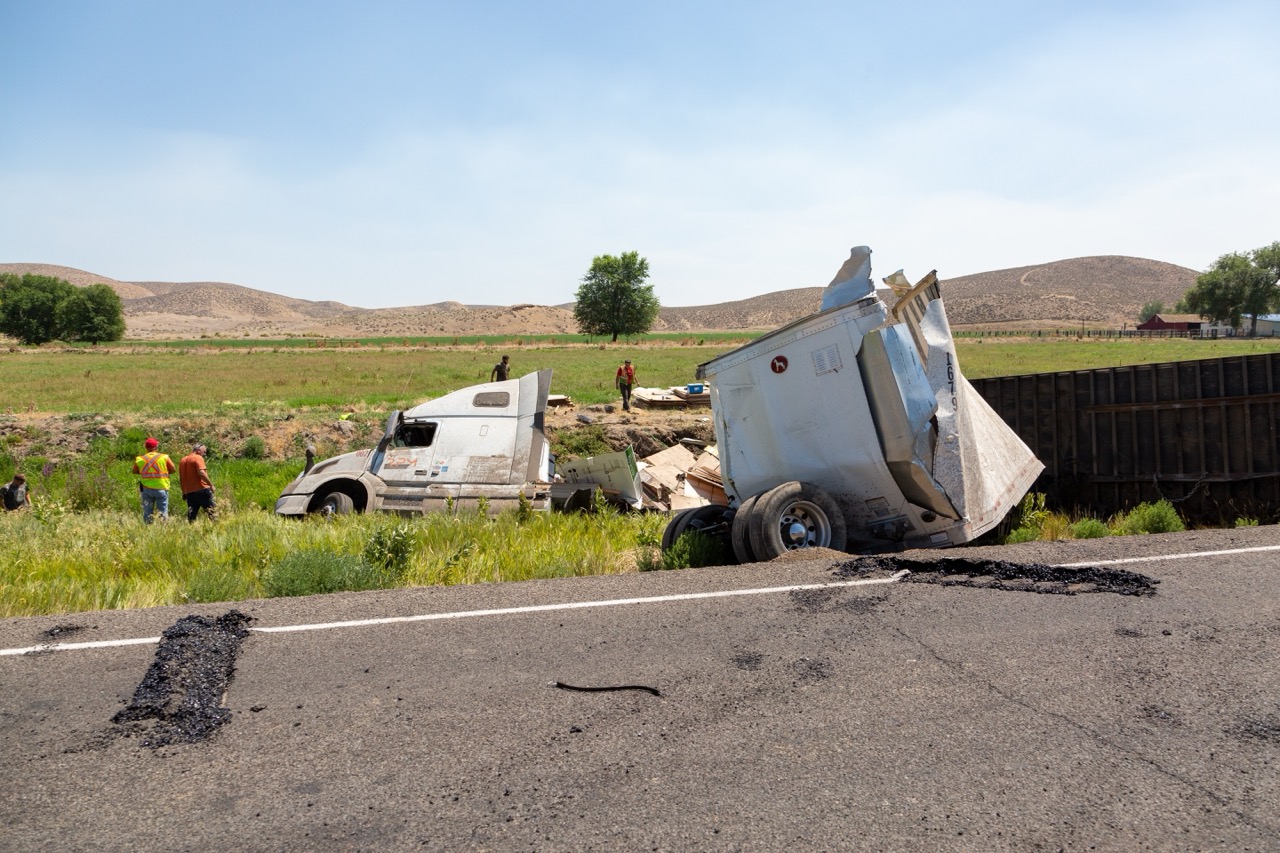
One of the many distinctions of Atlanta and Fulton County is the four major interstates — I-75, I-85, I-20, and the infamous I-285 perimeter — that run through the area. Because of its proximity to major interstates, the Atlanta area is a massive logistics hub, with most residents accustomed to the heavy concentration of commercial vehicles on interstates and surface streets.
Although you may be used to seeing commercial vehicle accidents, you must understand the leading causes to protect yourself from injury. This article provides information regarding the leading causes of truck accidents in Atlanta, so you can be better informed if you have been involved in a crash.
Why Georgia Sees So Many Truck Accidents
Georgia has long been positioned as a major U.S. logistics hub. The Port of Savannah is the fourth-busiest container port in the country, with Atlanta as a major distribution center. Our interstate corridors — I-75, I-85, I-20, and I-285 — accommodate a heavy volume of trucks daily.
Local Atlanta interstate corridors, including “Spaghetti Junction” (the I-85/I-285 interchange) and “Grady Curve” (the I-75/I-85 Downtown Connector), are some of the most dangerous stretches of highway for truck-involved accidents.
According to the Federal Motor Carrier Safety Administration (FMCSA), Georgia ranks among the top 10 states nationwide for fatal truck crashes. The high number of commercial trucks on Georgia roads increases the likelihood of accidents statewide.
Driver Fatigue and Distracted Driving
One of the most common factors that lead to commercial vehicle accidents is driver fatigue and distracted driving. Under the FMCSA Hours of Service (HOS) regulations, drivers are limited to 11 hours of driving within a 14-hour window after 10 consecutive hours off, with weekly limits of 60 or 70 hours.
Even though electronic logging devices (ELDs) are now mandatory per federal law, violations still occur. Examples include drivers using multiple logbooks or falsifying records.
Signs of driver fatigue include:
- Lane drifting
- Delayed reactions
- Failure to brake in time
Commercial driver fatigue is particularly dangerous because a fully loaded 18-wheeler can weigh up to 80,000 pounds. The stopping distance required when traveling at highway speed is 20 to 40% longer than that of a passenger vehicle.
Long-haul routes through our state — I-75 from Tennessee to Florida, and I-95 along the coast — often see drivers operating their vehicles when they are the most fatigued.
Distracted Driving
FMCSA rules prohibit commercial drivers from texting or using handheld cellphones (49 CFR § 392.82). Some other common distractions that lead to truck accidents include:
- GPS navigation
- CB radios
- Eating while driving
Georgia’s hands-free law (O.C.G.A. § 40-6-241.2) applies to all drivers, including commercial drivers.
Distracted driving can result in severe consequences for all motorists. It is a significant factor in accidents involving large trucks due to wider blind spots and longer stopping distances.
Speeding and Aggressive Driving
Professional drivers are usually under pressure from their trucking companies to deliver their loads on time or early so they can go to their next pick-up. As a result, drivers often engage in risky behaviors such as exceeding speed limits. In Georgia, the speed limit for commercial vehicles on the interstate is 70 mph, just as for passenger vehicles. Even so, many companies govern their vehicles to lower internal limits.
The faster a vehicle is traveling, the more distance it needs to stop safely. A truck traveling at 65 mph needs approximately 525 feet to stop fully. Aggressive driving behaviors such as tailgating (especially dangerous in blind spots), unsafe lane changes, and failure to yield can also lead to severe accidents.
Improper Loading and Mechanical Failures
Federal regulations stipulate weight limits on commercial vehicles. Exceeding the 80,000-pound gross weight limit impairs steering and braking, increasing the risk of collisions. Improperly secured cargo can easily shift during transport, increasing the likelihood that it spills onto the highway or causes a rollover accident. Hazardous materials that are improperly transported pose an increased risk of explosion and chemical spills.
In cases where improper loading has been determined to be the cause of the accident, liability may fall squarely on the loading company or on multiple parties, not necessarily the driver.
Mechanical Failures
FMCSA requires drivers to conduct pre- and post-trip vehicle inspections (49 CFR § 396.13). In many instances, it was determined that vehicle inspections were not completed. The most common mechanical cause of truck accidents is brake failure.
Other common mechanical failures include:
- Tire blowouts
- Steering system failure
- Lighting and visibility issues
Liability may rest with the driver for failing to inspect, the trucking company for poor maintenance, the repair shop for negligent repairs, or the manufacturer for defective parts. Although Georgia DOT weigh stations and inspection points will place trucks out of service due to violations, enforcement varies.
If you are pursuing a truck accident claim, your attorney should send a preservation letter to the trucking company immediately. The spoliation letter will prevent the company from destroying maintenance records, black box data, and inspection logs.
Impaired Driving and Inadequate Training
FMCSA rules impose a lower BAC limit for commercial drivers — 0.04%, rather than the 0.08% limit for passenger vehicles. Federal trucking regulations also require pre-employment, post-accident, and reasonable suspicion drug testing.
Common substances that can contribute to commercial truck crashes include:
- Amphetamines (used to stay awake)
- Marijuana
- Opioids (pain management)
- Over-the-counter medications that can cause drowsiness
Inadequate Training
The trucking industry is experiencing a shortage that has led many companies to hire underqualified drivers. FMCSA CDL requirements require drivers to be at least 21 for interstate travel and to have specific endorsements for hazmat, tankers, and doubles and triples.
Negligent Hiring
If the trucking company failed to properly verify the driver’s qualifications, administer drug tests, or check driving records, it can be held directly liable for the crash. The company can also be held accountable for retaining a driver with multiple violations, accidents, or failed drug tests.
Truck accident cases require immediate action to preserve evidence. Contact Durham Law Group today at 404-845-3434 for a free consultation.